

B2B vs B2C Ecommerce in UAE: How Your Website Build Changes
Posted on: 15 Sep, 2026
How Do B2B and B2C Ecommerce Websites Differ in the UAE?
B2B and B2C ecommerce websites in the UAE require different designs based on buying behaviour, decision-making, and customer needs. B2B websites focus on research, multiple decision-makers, custom pricing, and lead generation, while B2C websites prioritise fast navigation, visual appeal, simple checkout, and quick purchases.
The actual challenge of developing an online store is not about choosing between various eCommerce platforms but understanding whom exactly you sell to. While an individual customer may make a quick purchase through mobile browsing, a corporate buyer often takes a more detailed approach involving research, multiple decision-makers, and larger orders.
At Klever.ae, we understand that B2B and B2C ecommerce websites require different approaches to design, functionality, and customer journeys. Let’s explore the difference between B2B and B2C ecommerce website design UAE and how a combined strategy could benefit your enterprise.
What are B2B and B2C Ecommerce?
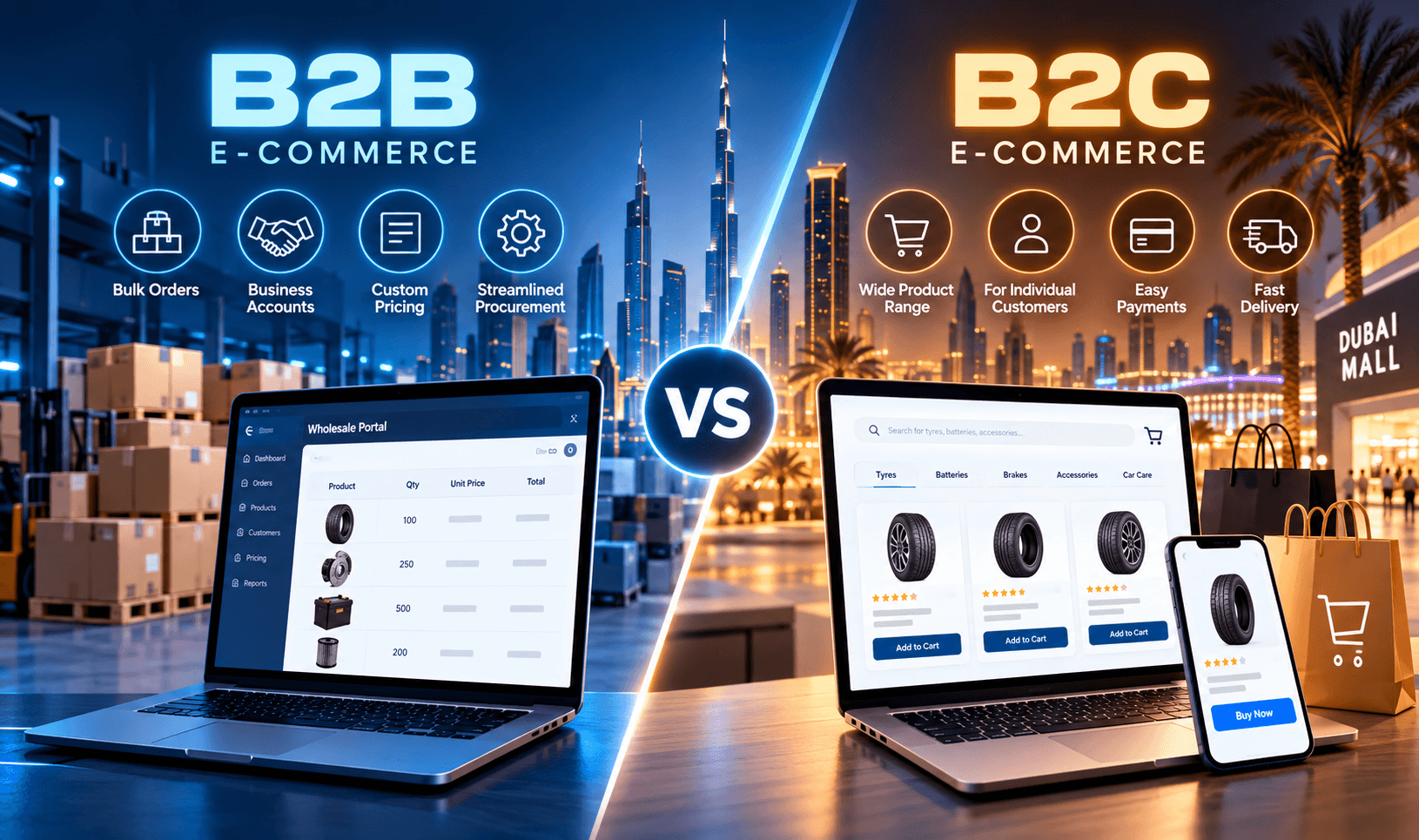
B2B (business-to-business) ecommerce occurs when companies sell their goods and services directly to other businesses, like manufacturers/wholesalers selling their products to retailers. B2C (business-to-consumer) ecommerce takes place when organizations offer goods or services for personal purposes directly to consumers. B2B transactions feature larger deal volumes and several decision-makers, while B2C transactions involve smaller amounts and quick purchasing.
Amazon provides a perfect illustration of how business functions simultaneously through two eCommerce websites; Amazon stores target individuals for general online shopping, whereas Amazon Business serves companies seeking large-scale purchases.
What Matters Most in B2B Website Design?
The B2B buyer comes to the table with certain expectations, needing to justify decisions and persuade co-workers.
- Messaging for Multiple Stakeholders
Business pages need to engage the attention of buyers, evaluation teams, procurement managers, and executive decision-makers with a single cohesive message. The key messaging approach should emphasize business results and value creation to attract interest and drive action.
- Trust & Credibility Layers
Big-ticket purchases require credibility and reassurance. Credibility can be created via case studies, client endorsements, and certification badges visible across business webpages. The objective is to quickly establish business trust and credibility through visual cues familiar to decision-makers.
- UX for Research-Heavy Journeys
B2B visitors carry out thorough analysis and comparison. UX design needs to provide clear and intuitive navigation along with a constant call-to-action button requesting a quote for each product/service page. Predictable website layouts enable buyers to move ahead confidently.
- Lead Capture Design Pattern
Progressive web forms that adapt according to user progress work better compared to pop-up modal dialogs.
What Matters Most in B2C Website Design?
The B2C consumer expects a quick purchasing experience online that involves decision-making within minutes. As such, web designs should eliminate any barriers to conversion immediately during interactions with a visitor.
- Emotion + Visual Persuasion
The use of lifestyle images along with consistent brand identity elements such as logos and colors helps consumers imagine themselves using the product.
- Fast Path to Conversion
Minimal navigation options, clear call-to-action buttons, and immediate shipping information provide reassurance and lead consumers towards purchase actions online.
- E-commerce UX Expectations
Well-designed e-commerce websites UAE feature robust search features, clear category structures, simplified checkouts, and lower cart abandonment rates.
- Personalization & Retention Hooks
Product suggestions, special bundles, and loyalty programs encourage repeat purchases from online shoppers in the UAE.
What Are the Differences Between B2B and B2C Website Design?
B2B and B2C ecommerce websites are designed around different buying journeys. B2B sites prioritise detailed information, multiple decision-makers, and flexible purchasing options, while B2C sites focus on speed, simplicity, and easy conversion.
| Factor | B2B Website | B2C Website |
|---|---|---|
| Target Buyer | Businesses and multiple decision-makers | Individual consumers |
| Buying Journey | Longer and research-driven | Shorter and convenience-focused |
| Pricing | Custom or quote-based | Fixed and transparent |
| Checkout | Assisted, account-based, or invoice options | Self-service and streamlined |
| Content | Case studies, specifications, and product details | Images, reviews, offers, and product benefits |
| Key Features | Bulk orders, custom pricing, approval workflows | Search, filters, wishlists, offers, and quick checkout |
What Are The Best Practices for B2B Website Design?
These best practices can help build a converting website design:
- Communicate directly with your customer profile
- Highlight key facts next to calls-to-action
- Construct navigational hierarchy based on the buyer’s journey process
- Provide lead magnets and follow-ups to engage potential leads
What Are The Best Practices for B2C Website Design
While building a website for end-users, keep these points in mind to get maximum conversions.
- Develop a straightforward route from landing page to buying process
- Make products easy to find with clear navigation and category structures.
- Publish reviews and shipping policies prominently for customers
- Include guest checkout facility with multiple payment options available
The Rise of Hybrid B2B/B2C Models
Some UAE companies adopt a hybrid approach by integrating B2B and B2C functionality into a single website. This creates balanced revenue streams from valuable B2B orders along with reliable B2C orders and necessitates dual price listings with tiered prices for business clients while regular prices apply to others. At Web Design UAE, our custom eCommerce web development services include this hybrid website design solution.
How to Choose the Right Ecommerce Website Approach?
While choosing the right eCommerce website approach, consider:
- Determine your catalogue requirements, whether you want basic listing functionality or sophisticated pricing capabilities
- Define the purpose of the ecommerce website
- Compare managed vs open platform approach
- Consider hosting and maintenance cost implications
- Ensure site speeds and analytics are supported
For clients who are ready to start or relaunch an eCommerce website, Klever.ae, a renowned web development company UAE, offers dedicated consultation services regarding B2C and B2B ecommerce website development UAE.
Frequently Asked Questions
A B2B website caters to buyers who conduct extensive research and require internal approvals. In contrast, B2C websites cater to individual consumers who reach decisions relatively quickly.
The concept refers to creating a website layout based on content that builds trust and features for various accounts.
Prices depend on requirements; B2C websites generally cost less for e-commerce stores than B2B websites.
Missing specifications, inadequate credibility information, and poor navigation on mobile devices are the main factors behind abandonment rates.
Yes, B2B buyers often need detailed product information, case studies, specifications, and other resources to evaluate options and justify purchasing decisions internally.